
In the Recording Studio
Updated: Aug 16


I've been back in the recording studio the last couple of weeks. I was asked to narrate the audio-book version of Chris Storey’s important book, SOCIAL WEAPONS: The Peaceful Self-Defense System. (See my interview with Chris here: https://www.laurahandke.com/post/spotlight-christopher-storey-msw-social-weapons-the-peaceful-self-defense-system.)
I’ll let you know how to find it when the audiobook is released – this peaceful self defense process has become an important piece of my own thought process when dealing with a potential conflict.
In the meantime, I thought you might enjoy some photos and insights into what it’s like narrating in a professional recording studio.
First, it’s fun! SOCIAL WEAPONS is non-fiction, so I wasn’t creating different character voices, but the material is so rich with examples and stories I was able to sink into that acting role very easily. That’s fun!
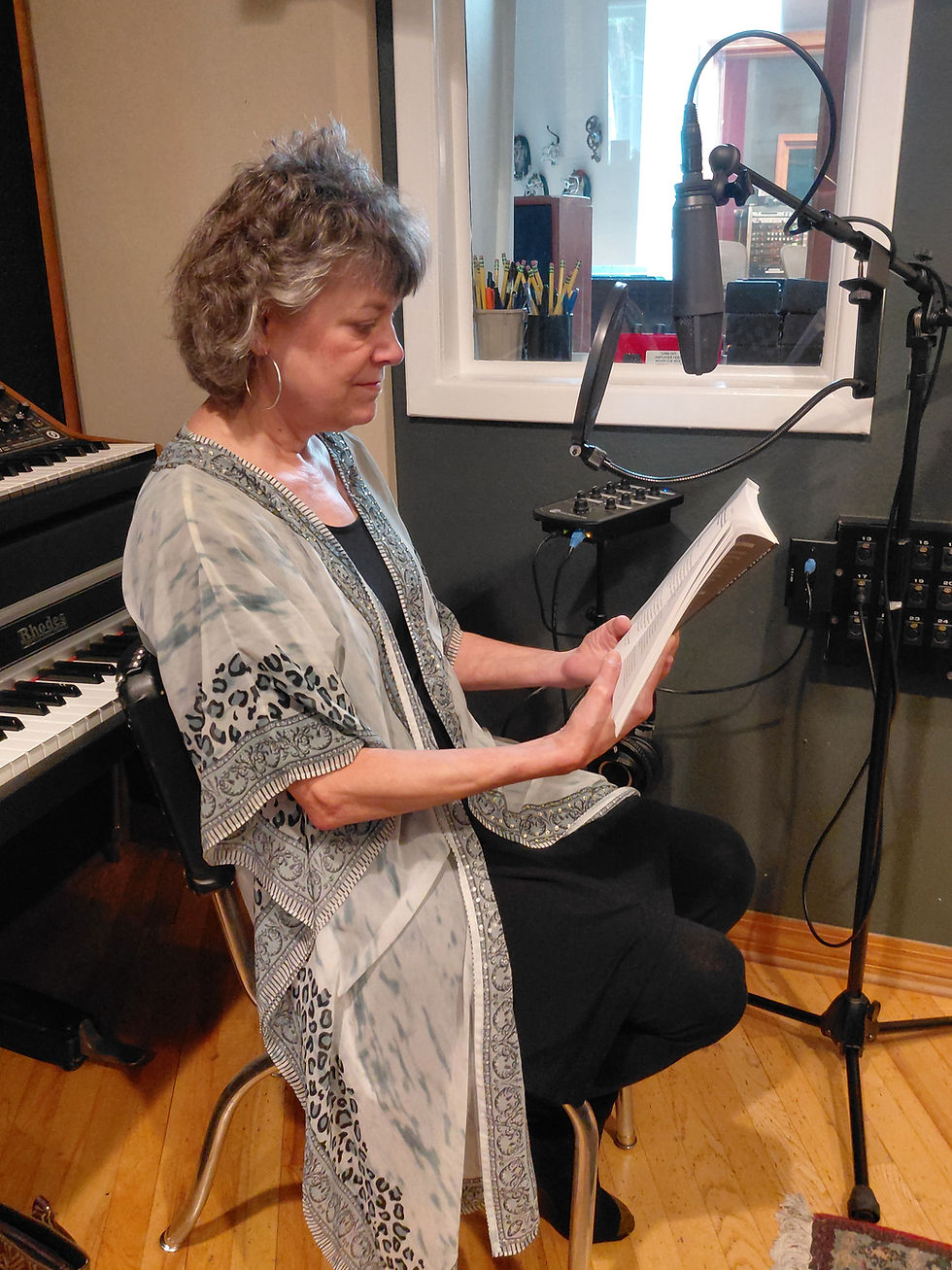
Narrating is different than other kinds of speaking or acting as you don’t have memorized dialog. I was reading from a physical book because the electronic PDF was simply too small for me to read. I was in a small area in the back of the studio with the mic close to my mouth. Turning of pages could often be heard, so I’d need to stop for a beat before reading further, so the page-turning sounds can be edited out.
The same for bungling words. SOCIAL WEAPONS is a 240-page paperback. Authors (other than playwrights and screenwriters) don’t write with someone needing to read it aloud in mind. I certainly didn’t with my four books! I’d read the book three times before being asked to narrate it and also attended the author’s class. But I didn’t have anything memorized.
Here is one randomly chosen sentence to use as an example: “The social weapon seduction entices or beguiles its victims as a means of acquiring control.” That is a perfectly clear and descriptive sentence. And when you read it aloud, there are a lot of S’s and your tongue can get tangled. That happened often with different phrases, several times in a session, so I’d need to stop and give it a beat before I picked up again, relying on the sound engineer for instruction and editing. In addition, when trying to understand the sentence structure and which words should be emphasized, or with names I didn’t know how to pronounce, I would find myself briefly losing the emotion and intent of the sentence message while I was figuring out how to deliver it at the same time.
If you’re interested in being an audiobook voice, known in the industry as a voice actor or “doing VO [voiceover] work”, these are the tips I have.
- If recording in a professional studio is new to you, make sure you’re breathing with a relaxed belly, sit with good posture, and have plenty of resonance in your voice. Ask vocalists you admire who their voice teacher is if you’ve never had a lesson or don’t understand what you can do to keep your voice from tiring. Here’s a free mini-voice lesson: https://www.youtube.com/watch?v=PjUERjaRIv8.
- Don’t be afraid to ask your sound engineer questions if you’re confused, having difficulty, or need something! When in doubt, speak up – don’t just plow through.
- Embrace your performing or meditative talent of letting go of your ego and any nerves, rely on your higher power, and dive into the material. Let it guide you. And scan the material for any particularly problematic phrases (that would be one right there) and practice them a few times, with your healthy and effective vocal technique.
- Ask for an electronic version in large enough print you can easily read it – voila, no page turning!
- Do some research on proper microphone technique for the spoken word. Keeping your head relatively still, not turning from side to side, and avoiding gestures/movement are all important.
I hope you find these tips helpful. If you have any specific questions, please don’t hesitate to ask.

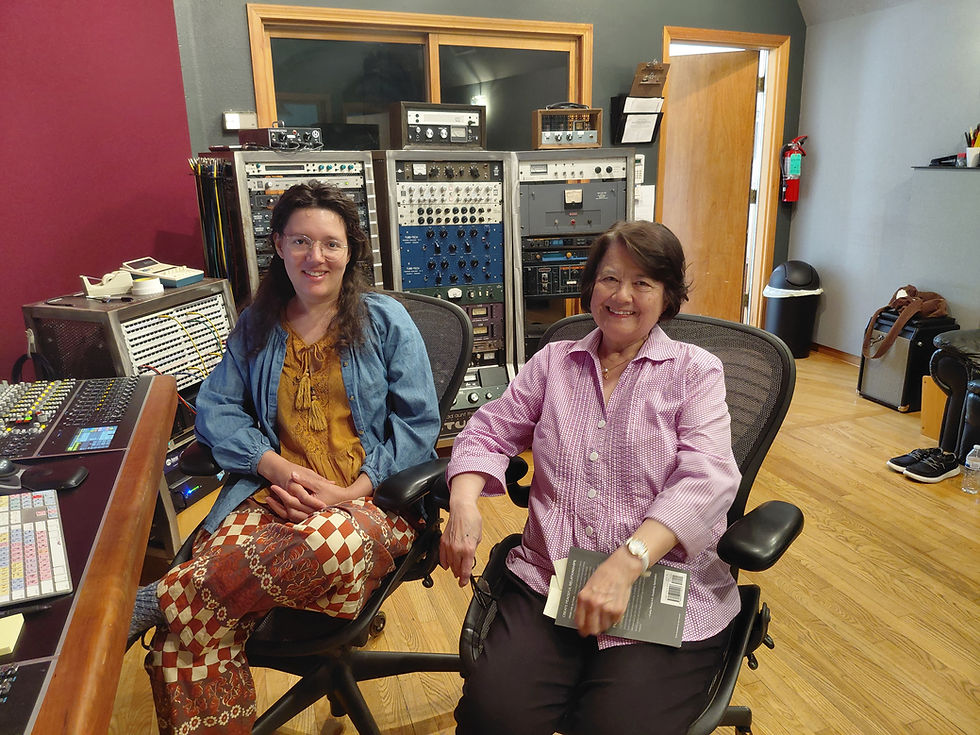
Emi Storey, the author’s wife and book editor, is a cultural anthropologist by interest and a retired geriatric physical therapist by trade.
Marena, our delightful sound engineer, is pursuing a career recording bands and making music right here in Portland, Oregon. She works at Dead Aunt Thelma’s Studio and Clackamas Community College. Her favorite thing about audio recording is how it’s both an art and a science – using the tools and equipment with technical skill, while imparting one’s own creative signature onto the end product. Marena has loved music since she was a very small child. It’s in her bones; but she never thought she’d one day make a living producing it. Now, she can’t wait to make more dynamic, stirring, beautiful records with amazing people. Finally finding the right path has brought her deep gratitude and joy.
Dead Aunt Thelma’s Studio is tucked away in the Sellwood Antique District. It has a relaxed, warm, but established and professional feel. A variety of different genres are recorded there, everything from jazz to choral to hard rock – and audiobooks! According to their website, Thelma’s client list is too long to name, but they are proud to have hosted sessions for artists such as: Lady Gaga, The Deftones, Rufus Wainwright, Wilco, Pink Martini, K.D. Lang, Sheryl Crow, Seal, Keane, Still Woozy, Dave Matthews, Neko Case, Tori Amos, Macy Gray, Everclear, Snow Patrol, and many more over the decades.
I don’t expect my name to end up on Thelma’s website any time soon, but I can tell you it was a pleasure to be there recording this valuable information with these terrific people. Stay tuned for the release of the audiobook.

It seems all any of us can do is voice our own truth as honestly and compassionately as possible and not become afraid or cower when attacked, without attacking back. To just open our hearts more and share more love while releasing anything that doesn’t resemble it. -Laura Handke
I wanted to get to know my actual voice, to sing authentically and not just emulating others. I am naturally shy and even though I sang in a band before I could never belt out a song at karaoke. Laura is helping me find my authentic voice and teaches with compassion, care and kindness as I learn. It’s been a wonderful experience with lots of joy too. I highly recommend Laura if you are on a similar journey of discovery. ~MK
Love Your Voice & Voice Your Love,
Laura


Comments